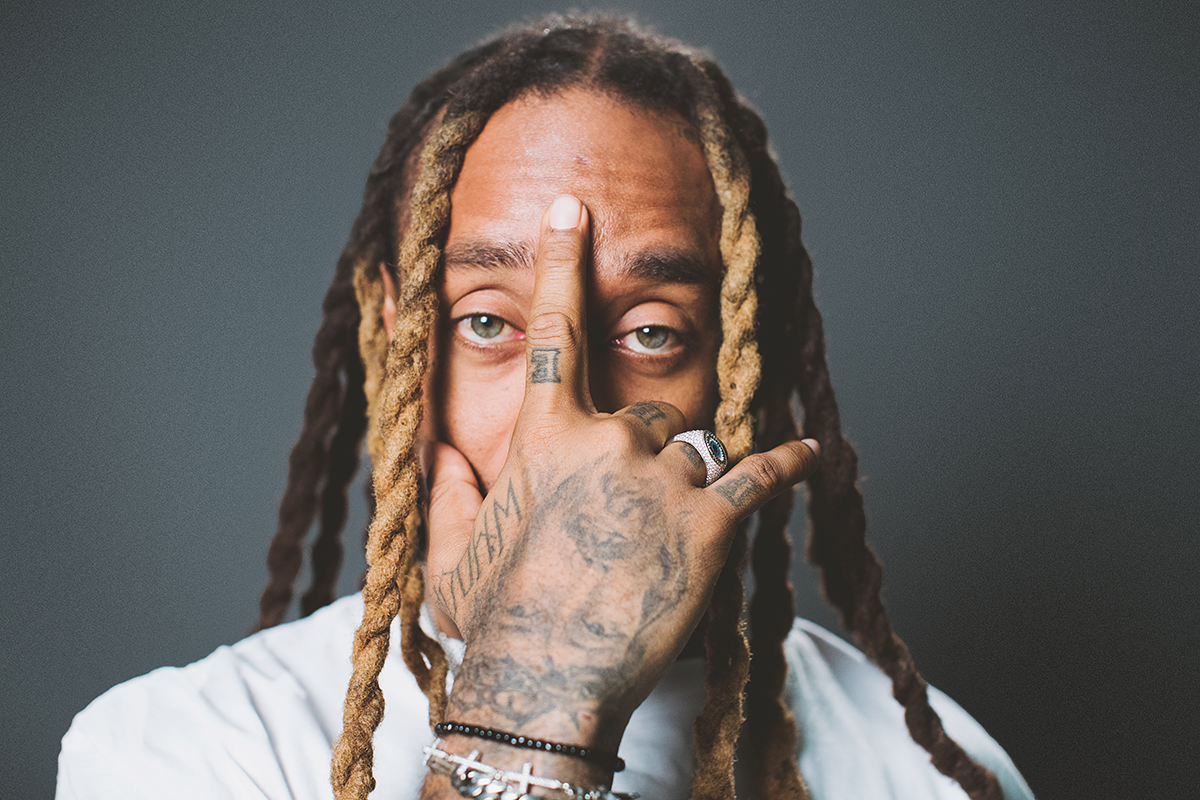
You’ve heard the voice. It’s that raspy, melodic, perfectly pitched tone that slips into a track and suddenly makes a "mid" song sound like a Grammy contender. It’s everywhere. Whether he’s anchoring a club anthem or adding a layer of soul to a stripped-back acoustic track, featuring Ty Dolla Sign has become the industry's ultimate cheat code.
He is the glue.
Tyrone William Griffin Jr. didn't just stumble into this role. He built it. If you look at the charts over the last decade, his name is the common denominator between artists who have nothing else in common. We’re talking about a guy who can pivot from a Post Malone smash to a SZA ballad without breaking a sweat. It’s not just about being a "guest artist." It’s about a specific kind of musical alchemy that very few people in the history of R&B or Hip-Hop have ever mastered.
The "Ty Dolla Sign Effect" is Real
So, why does everyone want him? Honestly, it’s because he doesn't try to outshine the lead artist. That’s the secret. Most features are ego trips. A rapper comes in, drops sixteen bars that have nothing to do with the hook, and leaves. Ty? He treats every feature like he’s a co-producer. He layers his own harmonies. He plays instruments. Did you know he’s a multi-instrumentalist? He plays bass, guitar, drums, and keyboards.
When you see featuring Ty Dolla Sign on a tracklist, you aren't just getting a vocal; you're getting a texture.
Take "Psycho" with Post Malone. That song went Diamond. A huge part of that success was how Ty’s verse mirrored Post’s energy while adding a different rhythmic pocket. He understands the "vibe" before the vibe even exists. It’s a rare skill. It’s why Kanye West—a notorious perfectionist—kept him in the inner circle for years, from the Life of Pablo sessions all the way through to the Vultures era.
Breaking Down the Collaboration Formula
It isn't just luck. Ty Dolla $ign grew up in a musical household. His father, Tyrone Griffin Sr., was a member of the funk band Lakeside. You know "Fantastic Voyage"? That’s the lineage we’re talking about. He grew up around Earth, Wind & Fire and Prince. This gave him a harmonic vocabulary that most modern rappers just don't have.
When he collaborates, he uses a few specific techniques:
- The Harmonic Stack: He rarely records just one vocal line. He stacks four or five layers of his own voice to create a "choir" effect that sounds expensive.
- The Rhythmic Shift: He often enters a song slightly behind the beat, which creates a sense of "cool" that makes the listener lean in.
- Genre Blurring: He can do "Ratchet R&B" one minute and "Coffee Shop Folk" the next.
Why Artists Keep Calling
Let's be real: the music industry is a business. A Ty Dolla $ign feature is a seal of approval. It tells the audience, "This track is sophisticated."
Think about "Loyal" by Chris Brown. Or "Work from Home" by Fifth Harmony. These are massive pop songs that needed a bit of "street" credibility and R&B soul to cross over. Ty provided that. He bridges the gap between the underground and the Top 40 better than almost anyone since Nate Dogg. Speaking of Nate Dogg, people make that comparison a lot. It’s fair, but Ty is arguably more versatile because he’s a writer and producer first.
He’s written for Rihanna. He’s written for Chris Brown. He knows how to build a hit from the ground up, which makes him an asset in the studio long before the microphone even turns on.
The Evolution from "Paranoid" to Global Star
In the beginning, around 2013, Ty was the "Ratchet R&B" king. "Paranoid" and "Or Nah" were huge, but they boxed him in. People thought he was just another LA artist making club music. But then he started popping up on songs with artists like James Blake and FKA Twigs.
That was the turning point.
He showed he could be avant-garde. He showed he could be vulnerable. By the time we got to his album Featuring Ty Dolla Sign (yes, he actually named an album that), the joke had become a badge of honor. He leaned into the meme. He acknowledged that his best work often happens when he’s playing off someone else’s energy.
The Financial Logic of the Feature
How much does a Ty Dolla $ign feature cost? Reports vary, and prices change based on the relationship between artists, but you’re looking at six figures for a verse and a hook from a guy with his track record. But for a label, that’s an investment.
A song featuring Ty Dolla Sign is almost guaranteed a certain number of streams just from his dedicated fanbase. More importantly, it gets the song onto specific R&B and Hip-Hop playlists that it might otherwise miss. It’s a strategic move.
Beyond the Vocals: The Musician Nobody Sees
If you watch his Tiny Desk concert, you see the real Ty. He’s sitting there with a bass guitar, leading a band, stripped of the Auto-Tune and the heavy production. This is where he earns his "Expert" stripes. He understands music theory. He understands how a minor seventh chord can change the mood of a chorus.
He’s a student of the game. He’s mentioned in interviews that he spent years just watching how big producers worked before he ever stepped into the spotlight. That patience is evident in his work. He doesn't rush his parts. Every "Ooh yeah" and "Dolla $ign" ad-lib is placed with surgical precision.
What This Means for the Future of R&B
Ty has changed the "feature" game. It’s no longer about just getting a big name on your song; it’s about getting the right name. He has set a standard for what a collaborator should bring to the table.
As the industry moves toward more independent releases and genre-fluid tracks, expect to see more artists trying to emulate his model. But they’ll find it’s hard. You can’t just buy that rasp. You can’t just fake that timing.
Whether he’s working with 21 Savage or Brandy, he remains the most consistent performer in the industry. He is the ultimate utility player. The MVP who doesn't need to start every game to be the most important person on the court.
Actionable Insights for Navigating the Ty Dolla $ign Discography
To truly understand why he is the "King of Features," don't just listen to the radio hits. Dig deeper into his collaborative history to see the range:
- Listen for the "Vocal Stack": Check out "Midnight Hour" with Skrillex. Listen to how many layers of Ty’s voice are happening at once. It’s a masterclass in vocal production.
- Study the Basslines: Many of the tracks he features on actually use his live bass playing. "Free 03" is a great example of his funky, Prince-inspired roots.
- Analyze the Transition: Listen to how he enters a song. He almost always waits for a "gap" in the production to make his entrance, which is why his features always feel like they "drop" perfectly.
- Check the Credits: Use a site like Tidal or Genius to look at the credits of your favorite songs. You’ll be surprised how many tracks have Ty listed as a background vocalist or writer even if he isn't "featured" in the title.
The next time you see a tracklist and see his name, don't just skip to his verse. Listen to how the entire song changes the moment he arrives. That is the true art of the feature.