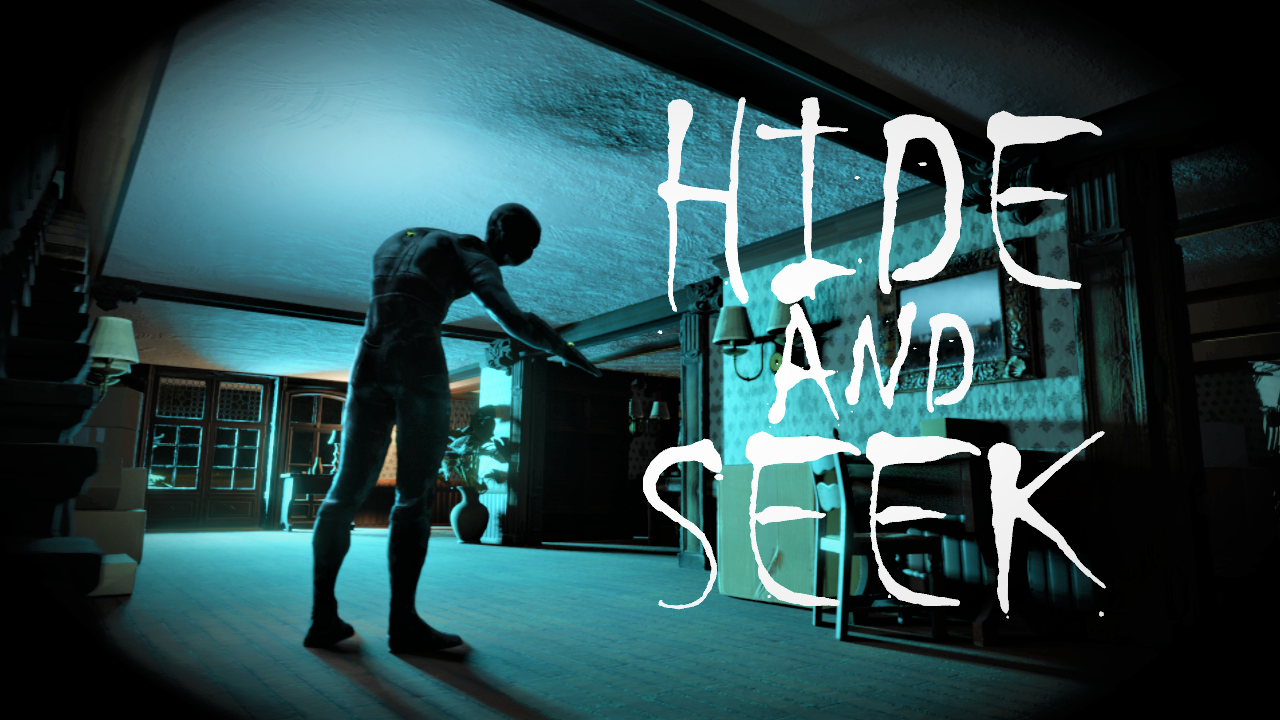
You know that feeling. You're squeezed into a dark closet, knees pressed against your chest, trying to silence your own breathing. Every floorboard creak outside that door sounds like a footstep. It’s supposed to be a game. But in your head, for a split second, it feels like life or death.
Film directors know this feeling better than anyone. They've spent decades turning our most innocent backyard pastime into a nightmare.
The hide and seek horror movie isn't just one specific film; it's a whole subgenre that taps into a primal, universal vulnerability. We’ve all played it. We all know the rules. And we all know the terror of being found by the wrong person.
The Rituals and the Rich: Ready or Not (2019)
If you ask anyone today to name a hide and seek horror movie, they’re probably going to shout "Ready or Not!" at you. Honestly, it’s for a good reason. This 2019 hit, directed by Matt Bettinelli-Olpin and Tyler Gillett, took a dusty trope and gave it a massive, bloody shot of adrenaline.
The premise is basically a nightmare version of Succession. Grace, played by a phenomenal Samara Weaving, marries into the ultra-wealthy Le Domas family. To officially join the clan, she has to draw a card from a mystical box and play a game. She draws "Hide and Seek."
Most of the family’s games are boring, like Chess or Old Maid. But Hide and Seek is the only one that ends with the family trying to sacrifice the bride to a devil named Mr. Le Bail before dawn.
What makes Ready or Not stand out isn't just the gore—and trust me, there is plenty of it. It’s the sheer absurdity. You have characters like Fitch, played by Kristian Bruun, literally watching YouTube tutorials in the middle of a hunt because he doesn't know how to use a crossbow. It captures that weird mix of high-stakes terror and the "bumbling idiot" energy of people who have never had to work for anything in their lives.
The film was a massive success, pulling in over $57 million on a tiny $6 million budget. It proved that audiences are still hungry for a high-concept survival game, especially when it’s punching up at the 1%.
The Psychological Twist: Hide and Seek (2005)
Long before Samara Weaving was dodging axes, Robert De Niro was starring in the 2005 thriller simply titled Hide and Seek. This one hits differently. It’s not a slasher; it’s a slow-burn psychological mess.
De Niro plays David Callaway, a psychologist who moves to upstate New York with his daughter, Emily (Dakota Fanning), after his wife’s tragic suicide. Emily starts talking to an imaginary friend named Charlie. At first, David thinks it’s just a coping mechanism. Then the local sheriff turns up dead. Then the family cat ends up in a bathtub.
Critics mostly hated this movie back in the day—it’s sitting at a dismal 12% on Rotten Tomatoes. But looking back 20 years later, it’s kind of a fascinatng relic. It relies heavily on the "unreliable narrator" trope and features five different filmed endings.
In the most famous version, it turns out David is Charlie. He has dissociative identity disorder, sparked by catching his wife cheating. The "game" wasn't just between a girl and her imaginary friend; it was a fractured man hunting his own daughter. It’s dark, it’s gritty, and while it might be "logical nonsense" to some, it paved the way for the "creepy kid" movies we see today.
Why Hide and Seek Works in Horror
Why do we keep coming back to this?
It’s about the loss of the "Safe Space." In most horror movies, the house is supposed to be your fortress. In a hide and seek scenario, the house becomes a cage.
- Vulnerability: You are literally making yourself small. To hide, you have to be passive. You are waiting to be found.
- Sensory Deprivation: Most of these films rely on what you can't see. You’re looking through the slats of a shutter or a crack in a door.
- The "It" Factor: There is a specific dread associated with the seeker. In the 2013 Korean film Hide and Seek (and its 2021 US remake), the terror comes from a stranger living in your home, hiding in plain sight.
Noteworthy Variations on the Theme
Not every hide and seek horror movie uses the actual name. Sometimes the game is baked into the DNA of the story without the formal counting.
- Don’t Breathe (2016): This is hide and seek on steroids. A group of thieves breaks into a blind man’s house. He’s the seeker; they are the hiders. The catch? If they make a single sound, they’re dead.
- The Boy (2016): A nanny is hired to look after a doll. There are rules. If she breaks the rules, the "boy" starts playing games with her, moving things around, and hiding in the walls.
- Hush (2016): A deaf writer is hunted by a masked killer in her secluded home. Because she can’t hear him, the entire movie is a visual game of cat-and-mouse where she has to use her environment to hide her presence.
The Global Influence: From "Petak Umpet" to Urban Legends
The trope isn't just an American obsession. In Japan, there’s a terrifying urban legend called Hitori Kakurenbo, or "One-Man Hide and Seek." It’s a ritual where you play against a possessed doll.
The 2009 movie Creepy Hide n' Seek leans into this, showing characters filling dolls with rice and fingernails to summon spirits. It’s a ritual that supposedly goes wrong every single time.
Similarly, the Indonesian film Petak Umpet (2024) is based on a viral story about a boy whose sister goes missing during a game. Legend says she was taken by a Wewe Gombel—a supernatural being that kidnaps children. These stories work because they take a universal childhood experience and add a local, cultural bogeyman.
How to Survive a Cinematic Game of Hide and Seek
If you ever find yourself in a movie like this, stop doing what the characters do. Seriously.
First off, stop hiding in the closet. It’s the first place anyone looks. In Ready or Not, Grace’s best move wasn't hiding; it was moving. Stationary targets get caught.
Second, use the environment. In the 1967 classic Wait Until Dark, Audrey Hepburn plays a blind woman being hunted in her apartment. She breaks every light bulb in the house to level the playing field. If you can’t see, the seeker shouldn't be able to either.
Lastly, don't trust the "safe" people. Whether it’s your in-laws or your own dad (looking at you, De Niro), the seeker is often the person you least expect.
Actionable Insights for Horror Fans
If you want to dive deeper into this subgenre, don't just stick to the blockbusters.
- Watch the original 2013 Korean Hide and Seek. It's much more atmospheric than the remakes and focuses on the "proletarian" fear of the lower class invading wealthy spaces.
- Analyze the lighting. Notice how these films use "Rembrandt lighting" to create deep shadows where the seeker could be standing right next to the protagonist without being seen.
- Check out "Ready or Not" on a rewatch and look for the board game names in the opening credits. You’ll see games called "Family Ritual" and "Secret Criminal." The clues are always there.
The hide and seek horror movie works because it reminds us that nowhere is truly safe. Even the games we played as kids had a dark edge to them. We were practicing for the hunt. We were learning how to disappear. And in the world of horror, sometimes disappearing is the only way to stay alive.
Next Steps for Your Movie Night:
Start with the 2019 Ready or Not for a fun, high-energy experience. Then, pivot to the 2016 film Hush to see how silence changes the hide-and-seek dynamic entirely. If you’re feeling brave, track down the Japanese Creepy Hide n' Seek to see the supernatural side of the game.