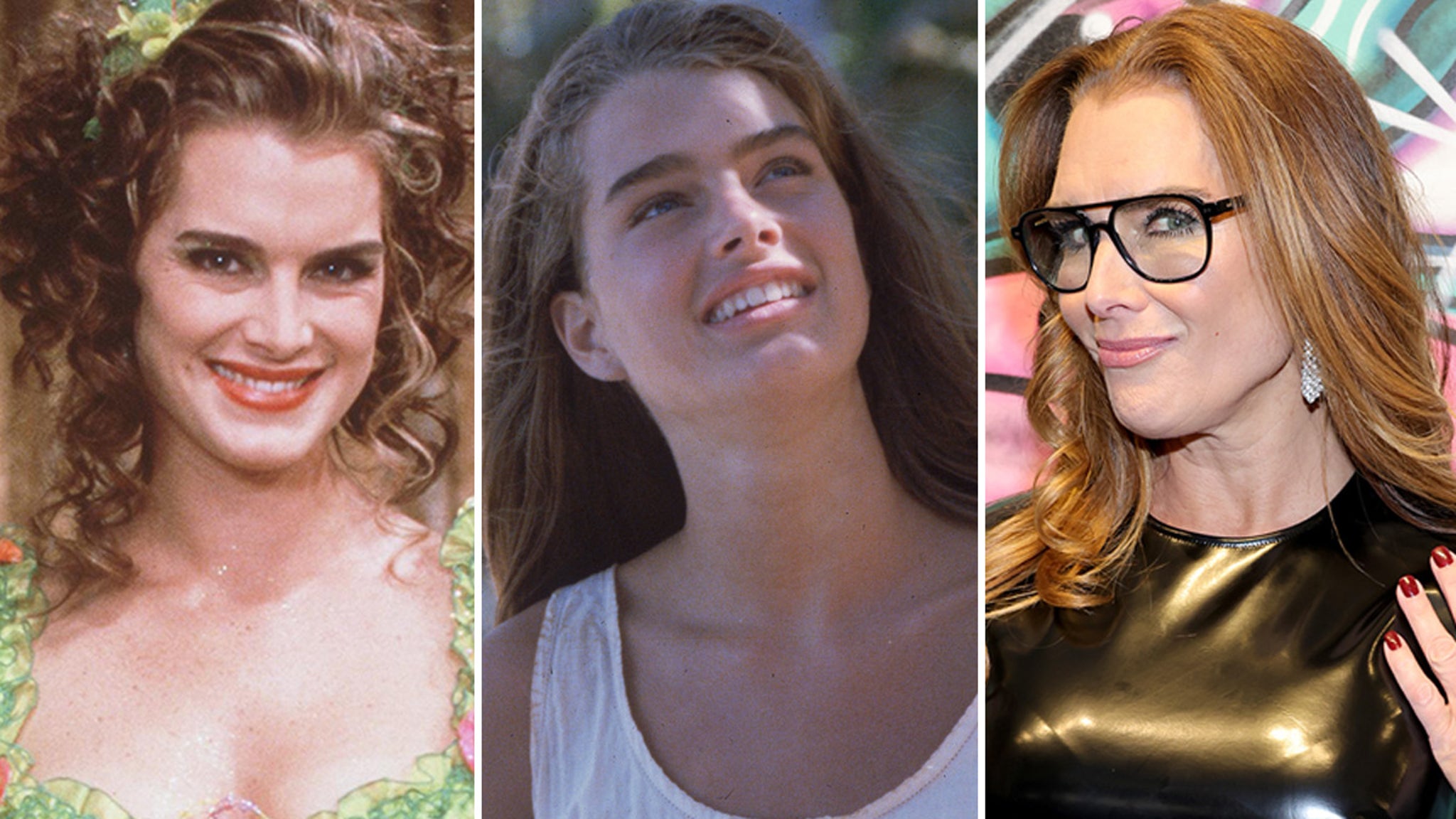
Brooke Shields has been a household name for so long that we almost treat her like a public monument rather than a person. People think they know the story. The eyebrows, the Calvin Klein jeans, the blue water of a tropical lagoon—it’s all part of the collective memory of the 80s. But looking at Brooke Shields through the years isn't just a trip down a nostalgic red carpet. It’s actually a pretty jarring look at how we, as a culture, treat young girls and then, almost more aggressively, how we treat women as they dare to turn 60.
Honestly, her life started as a business transaction. Her mother, Teri Shields, had her modeling at 11 months old for Ivory Snow. By the time most of us were learning to ride a bike, Brooke was the primary breadwinner for her family. That’s a heavy lift for a kid. It wasn’t just "modeling," either. It was the kind of work that would probably get a production shut down today.
The Era of the "Adult Child"
If you revisit her 1978 film Pretty Baby, it’s hard to watch without flinching. She was 11. She played a child living in a New Orleans brothel. The director, Louis Malle, was hailed as a genius, but Brooke was the one who had to navigate being a sexualized object before she’d even had her first period. She’s talked recently, especially in her 2023 documentary Pretty Baby: Brooke Shields, about how she basically dissociated during those years.
She had to. It was survival.
Then came the 1980 Calvin Klein ads. "You want to know what comes between me and my Calvins? Nothing." You’ve heard the line. It’s iconic. It also got the ads banned from ABC and CBS. At 15, she was the face of a brand that sold "sex," yet she was a virgin in real life who didn't even understand the double entendre she was whispering to the camera. It’s a wild irony. The world was obsessed with her sexuality, while she was busy trying to figure out how to be a teenager under the constant glare of a lens.
Choosing the Ivy League Over Hollywood
In 1983, she did something most "it" girls wouldn't dream of doing. She walked away.
She didn't quit for good, but she put her career on ice to go to Princeton University. People in the industry told her she was crazy. They said she’d be forgotten. But Brooke has been pretty vocal about the fact that those four years studying French Literature were the only time she felt like she owned her own brain. For the first time, she wasn't "Teri's daughter" or "The Blue Lagoon girl." She was just a student getting a C on a paper or eating in a dining hall.
When she came back to acting in the 90s, Hollywood wasn't exactly waiting with open arms. The industry likes you young and malleable. A woman with a degree and an opinion? That’s harder to market.
The Comeback and the Controversy
The 90s gave us Suddenly Susan, which was a massive hit and proved she had legitimate comedic timing. She wasn't just a face; she was actually funny. But the most significant part of her "middle years" wasn't a sitcom. It was her honesty about postpartum depression.
After her daughter Rowan was born in 2003, Brooke went through a darkness that she eventually detailed in her book Down Came the Rain. This was 2005. People didn't talk about PPD back then. When Tom Cruise famously criticized her for using antidepressants—suggesting she should just take vitamins and exercise—she didn't back down. She wrote an op-ed in the New York Times that basically told him to stay in his lane. It was a turning point. She stopped being the "quiet, obedient girl" her mother had raised her to be.
Why the Recent Years Feel Different
By the time she hit her 50s, Brooke started shifting into a different gear. She’s no longer waiting for a director to cast her. She’s the CEO of her own hair care brand, Commence, which specifically targets women over 40. It’s a niche the beauty industry usually ignores because, let's face it, society is obsessed with youth.
She also released a new book in early 2025, Brooke Shields Is Not Allowed to Get Old. The title is a tongue-in-cheek jab at the public’s refusal to let her age. She’s shared stories about dermatologists trying to "fix" her face while she was just there for a mole check.
Her life now is about agency. Whether it’s her podcast Now What? or her Netflix rom-coms like Mother of the Bride, she seems more comfortable in her skin than she ever was when she was the most beautiful girl in the world.
How to Apply the Brooke Shields "Reinvention" Mindset
If you're looking at your own career or life path and feeling "stuck" in a version of yourself that no longer fits, there are a few things we can actually learn from how Brooke handled her 50-year career:
- Don't be afraid to pause. Her decision to go to Princeton cost her "momentum" in the short term but gave her the mental health and perspective to survive the long term. If you need to step back to reskill or just breathe, do it.
- Own your narrative. When the media tried to paint her as a "fallen star" or a "struggling mom," she wrote the books herself. She didn't let a tabloid tell her story. If people are misinterpreting your work or your goals, speak up.
- Pivot toward your peers. Instead of trying to compete with 20-year-olds, Brooke started a company for women her own age. There is massive power (and a massive market) in serving the people who grew up with you.
- Acknowledge the "dissociation." We all have parts of our past where we were just "going through the motions." Brooke’s ability to look back at her younger self with empathy, rather than shame, is a huge lesson in self-forgiveness.
Brooke Shields through the years shows us that being a "prodigy" is a trap, but being a "survivor" is a choice. She’s currently 60, she’s busy, and honestly? She seems like she’s just getting started with the version of herself she actually likes.
If you want to dive deeper into her recent work, check out her documentary on Hulu or pick up her latest memoir to see how she’s tackling the "ageism" talk head-on. It’s a lot more interesting than just looking at old photos of jeans.